Wholesale Christmas tree pricing and MOQ, explained simply
If you have ever looked at a wholesale quote for artificial Christmas trees and wondered how the factory arrived at that number, you are in good company. Most first-time buyers do. The good news is that tree pricing follows a fairly simple logic once someone walks you through it, and once you understand the moving parts, you can plan your retail margin with real confidence rather than guesswork. So let us walk through it together, step by step, the way we would with any new buyer sitting across the table from us in Guangzhou.
What actually drives the per tree cost
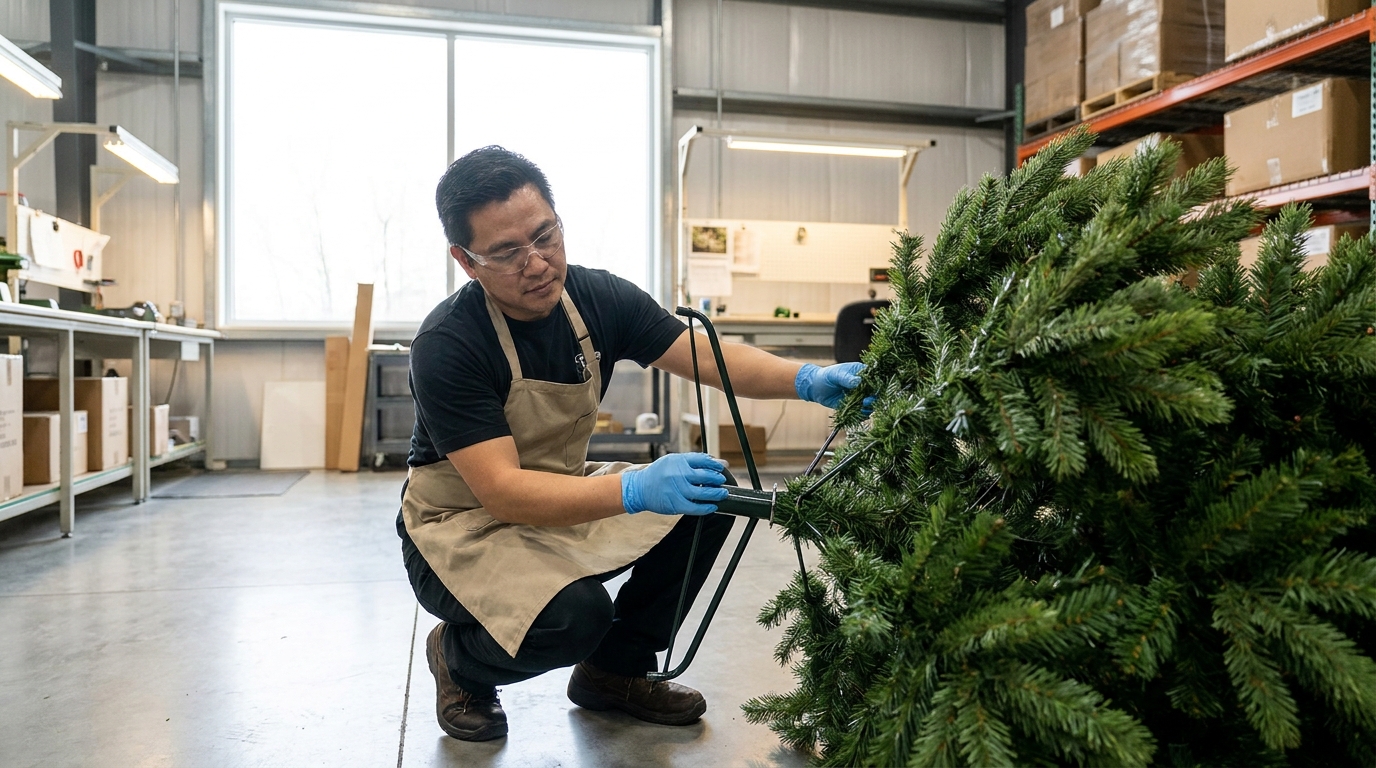
Every artificial tree is priced from its bill of materials plus labour, and five things account for almost all of the difference between a $12 tree and a $60 tree at FOB level.
- Height and fullness. A 1.5 m tree uses far less material than a 2.4 m tree, and tip count matters as much as height. A slim 1.8 m tree with 600 tips costs noticeably less than a full-bodied 1.8 m tree with 1,000 tips.
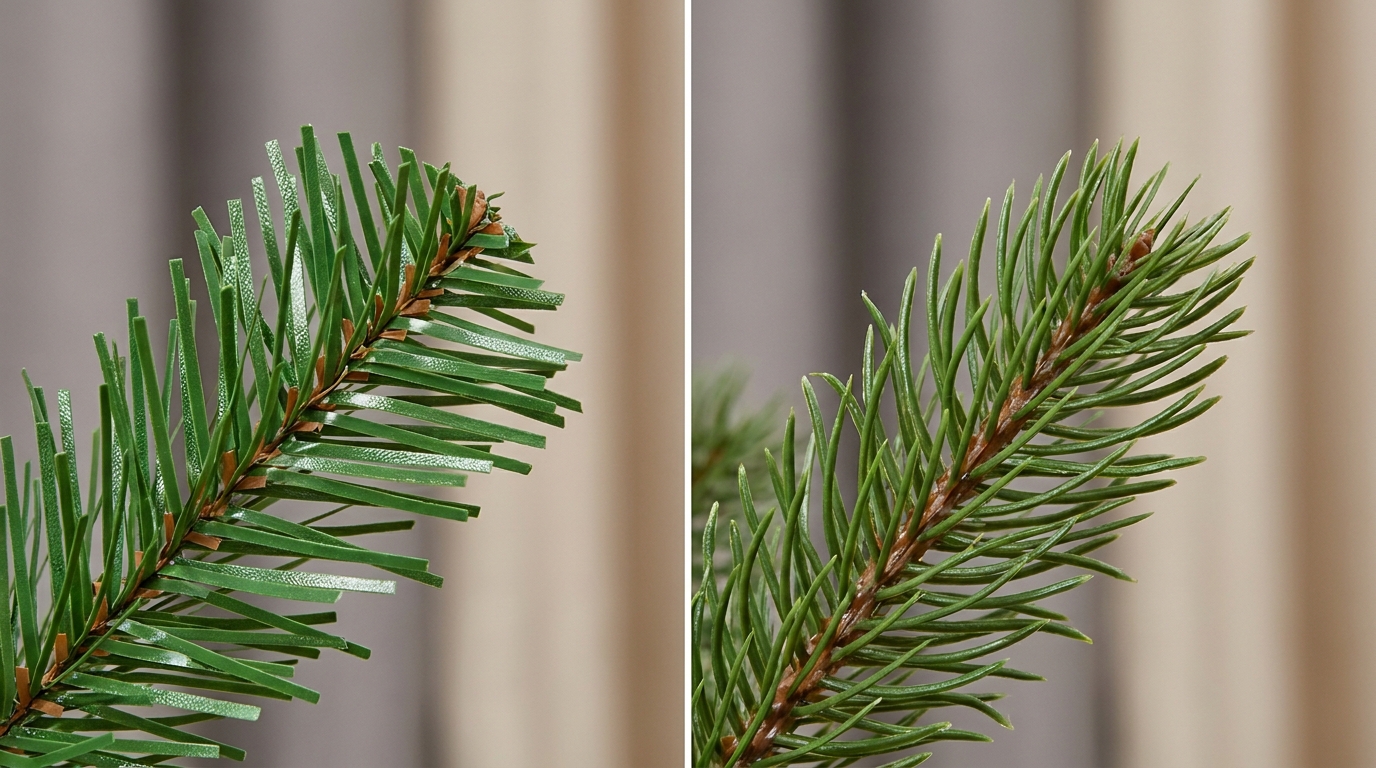
- Tip type. Classic PVC film tips are the most economical. Moulded PE tips, the ones that look like real fir branches, cost more to produce, so a mixed PE and PVC tree usually runs 40 to 80 percent above an all-PVC tree of the same size.
- Flocking. A snow-flocked finish adds a full production stage, extra material and extra drying time. Expect it to add roughly 15 to 25 percent to the base price.
- Pre-lit wiring. Factory-installed lights add the cost of the light strings, certified transformers for your market, and careful hand labour. Depending on bulb count and certification, this adds anywhere from $6 to $20 per tree.
- Packaging. A plain brown carton is cheapest. Full-colour retail printing, inner protective bags, and reinforced five-ply cartons for long sea journeys each add a little. Good packaging is money well spent, because it protects your margin all the way to the shelf.
As a reference point, a classic 1.8 m PVC tree in a plain carton typically sits somewhere between $12 and $18 FOB, while a 2.1 m mixed PE and PVC pre-lit tree with retail packaging lands in the $35 to $55 range. Exact figures depend on the season and your specification, but those brackets give you a realistic planning base.
How MOQ works, and why it exists
MOQ, the minimum order quantity, is simply the smallest run that makes a production line worth setting up. Changing over a line to a new model takes time, moulds, colour matching and quality checks, so factories set a floor per model. For artificial trees, a common MOQ is 100 to 300 pieces per model per colour. Larger or more complex trees often carry the lower figure, while small tabletop trees may need 500 pieces or more because each unit is quick to make.
The important word there is per model. Your total order can be much bigger than any single MOQ, and it usually is, because most buyers want a range of heights and styles rather than a thousand identical trees.
Price breaks reward volume, gently
Once you clear the MOQ, pricing steps down at volume thresholds. A typical ladder looks like this: the base price at MOQ, around 3 to 5 percent off at 500 pieces of a model, and 8 to 12 percent off at 1,000 pieces or a full container commitment. The savings come from real efficiencies, longer uninterrupted production runs and better raw material buying, so they are sustainable rather than promotional.
A practical tip: if you are close to a threshold, ask. Moving from 450 to 500 pieces of your best seller often pays for itself immediately, and your factory partner will happily show you the maths.
Mixing models across one order and one container
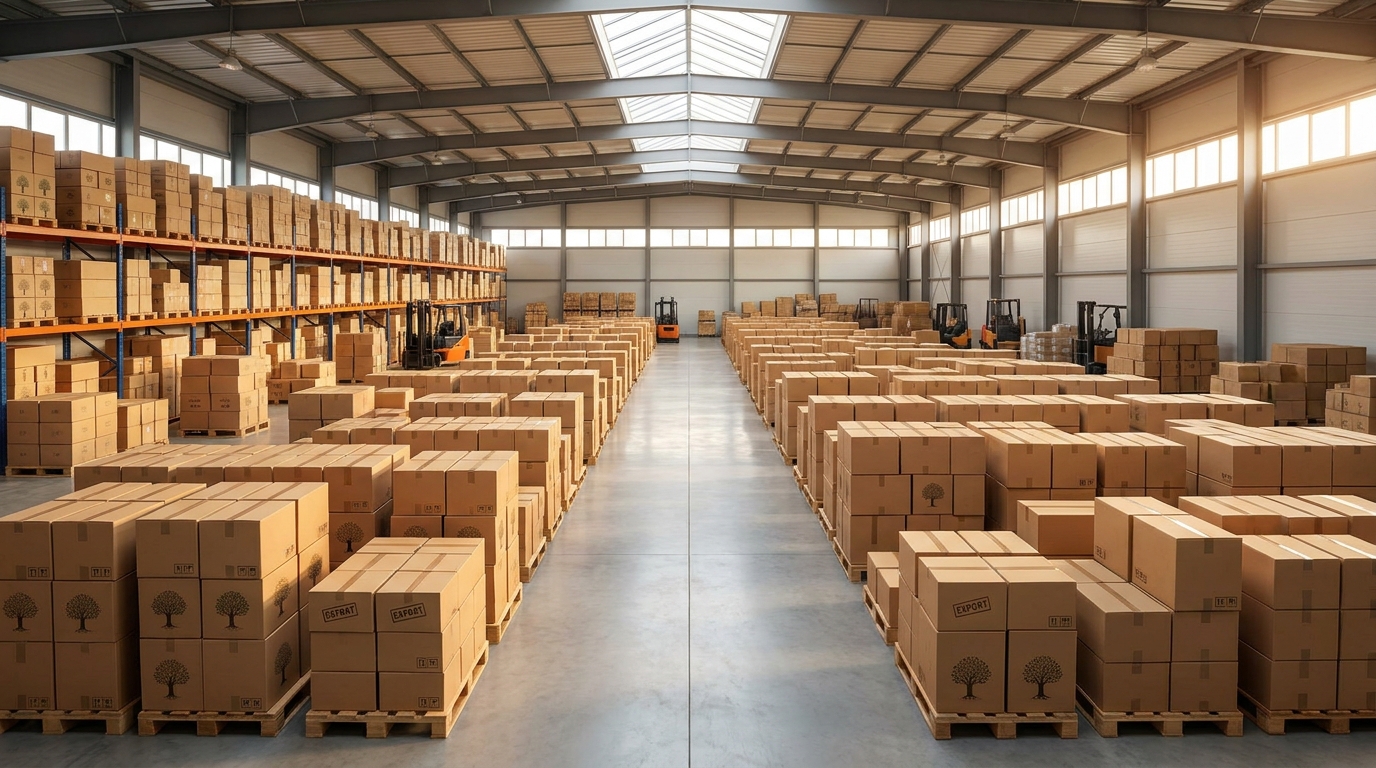
This is where planning gets enjoyable. A 40 ft high cube container holds roughly 1,000 to 1,400 boxed 1.8 m trees, fewer if your mix leans toward 2.4 m models with larger cartons, more if you include tabletop sizes that nest efficiently. A sensible first container might look like 400 pieces of a 1.5 m tree, 500 pieces of a 1.8 m tree in two colours, 200 pieces of a 2.1 m pre-lit model and a few hundred small trees to fill the remaining volume.
Each model still needs to meet its own MOQ, but the container is loaded together, ships together and clears customs together. Mixing lets you test several price points in your market from a single shipment, which is exactly how most successful tree ranges are built.
Think of the container as your shop shelf in advance. Fill it with the spread of heights and prices your customers will actually see, not with one tree repeated a thousand times.
What a landed price with delivery included really means
FOB pricing covers the tree delivered to the port in China. A landed or CIF-style price with delivery included goes further: it wraps ocean freight, insurance and delivery to your destination port into one number per tree. For a 1.8 m tree, that shipping component often works out to $3 to $8 per unit depending on carton volume and current freight rates.
The value of a delivered price is predictability. You know your true cost per tree before you commit, so your retail margin calculation is done on day one. If your delivered cost is $22 and your retail price is $79, you can see your gross margin clearly and build promotions around it with confidence.
Why the calendar is your best negotiating tool
Tree factories run on a rhythm. Orders placed between January and April enter production during the quieter months, which means better pricing, first pick of materials, and relaxed timelines for samples and revisions. Production for early orders typically runs May through July, with sailing in August or September and arrival comfortably before your October shelf date.
Orders placed in summer still ship in good time, though freight rates rise as peak season approaches and production slots tighten. The pattern is simple and friendly to plan around: the earlier you confirm, the more room everyone has to get every detail right, from tip colour to carton print, and the more of your budget stays in your margin rather than in freight.
Start with a clear spec, respect the MOQ per model, mix your container wisely, and lock in a delivered price early in the year. Do those four things and wholesale tree buying becomes what it should be, a calm annual routine with numbers you trust.
Ready to price your Christmas range?
We are a Guangzhou factory partner. Send your sizes and quantities and we will quote you, delivery included.