The quality checks that keep tree customers coming back
Ask any retailer who has sold artificial Christmas trees for a few seasons and they will tell you the same thing. The first order wins a customer, but the quality wins the repeat order. A tree that looks full on the shop floor, assembles without fuss and stands straight in a living room for ten years does more for a brand than any amount of advertising. That standard does not happen by accident. It comes from a set of practical checks, carried out at the factory before a single carton is loaded, and a good factory partner treats those checks as part of the product itself. Here is what we look at, in the order it matters, and why each check protects the reputation of the buyer whose name goes on the box.
Start with the tips, because the eye starts there
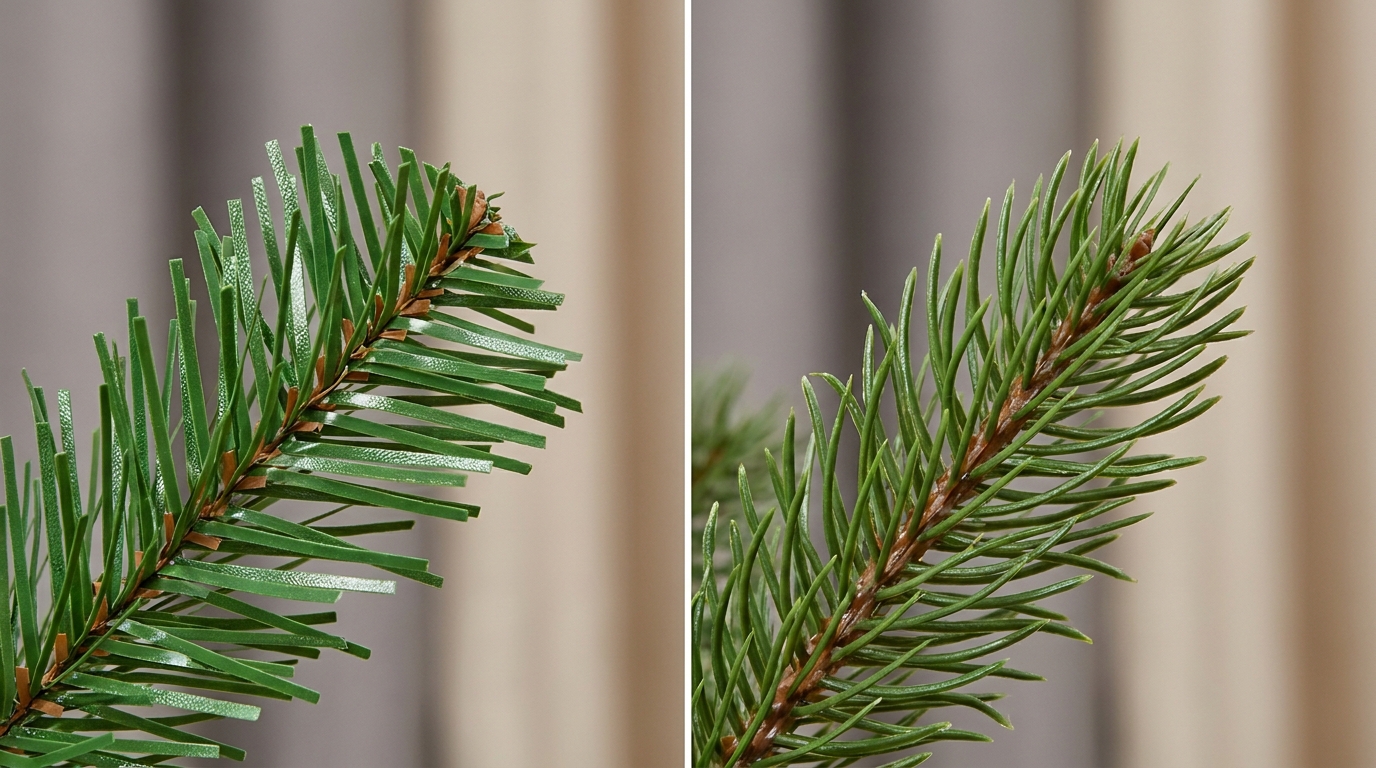
The fullness of an artificial tree comes down to branch tips. The number printed on the specification sheet, whether it is 800 tips on a compact 6 foot tree or 2,500 on a generous 7.5 foot model, sets the expectation, and the tree on the floor has to meet it. So we count. Not every tree, but a sampled selection from each production run, tip by tip against the approved sample.
Density matters as much as the raw count. A thousand tips bunched near the trunk leave gaps at the branch ends, while the same thousand spread evenly give that layered, natural look shoppers reach out to touch. We check spacing along each branch and compare the silhouette against the golden sample kept from the buyer’s approval stage.
Material mix is part of the same conversation. PVC tips give volume and hold their shape at a sensible cost, while PE tips, moulded from real branch impressions, carry the realistic texture that premium ranges are known for. Many of the best sellers blend the two, with PE on the outer visible layer and PVC filling the body. During inspection we confirm the blend ratio matches the specification, because a tree quietly built with less PE than promised will look different from the display model, and shoppers notice.
Colour that holds steady across the whole run
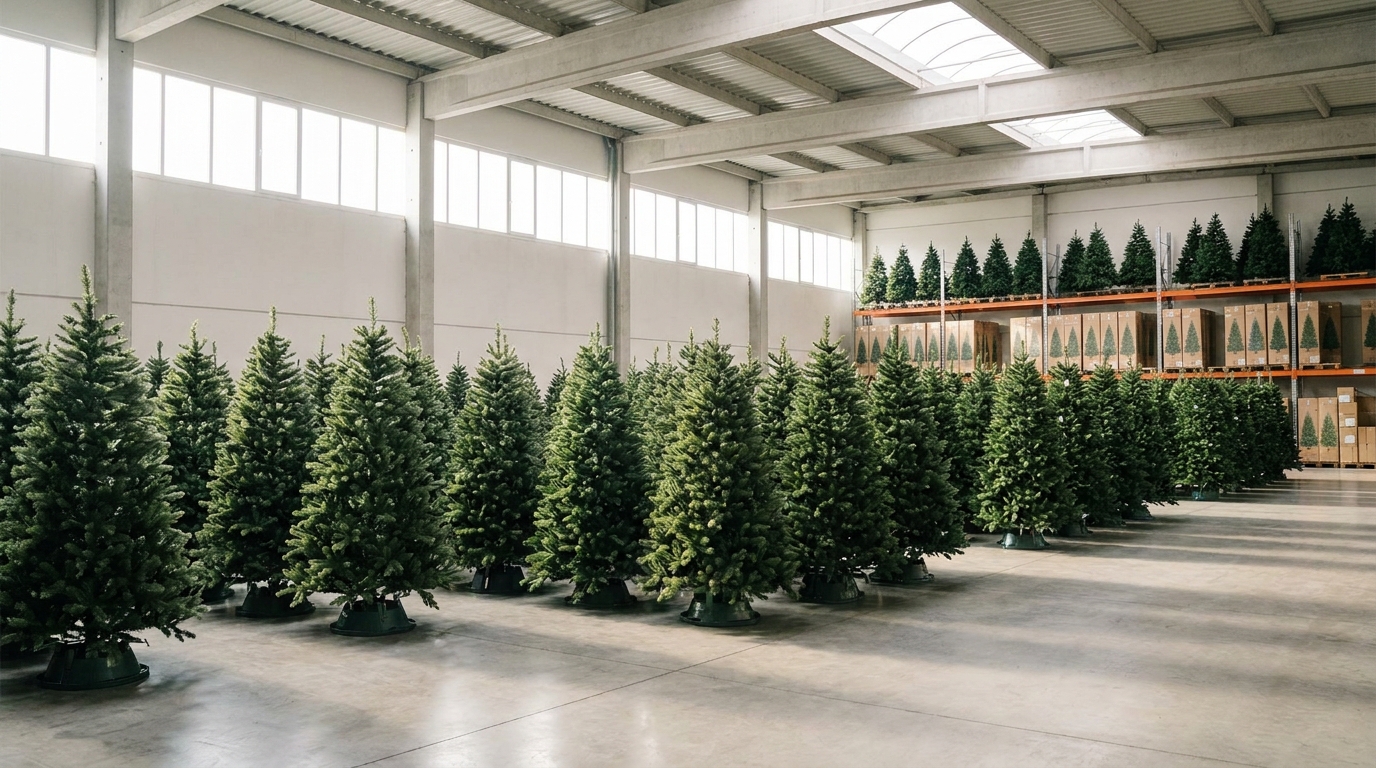
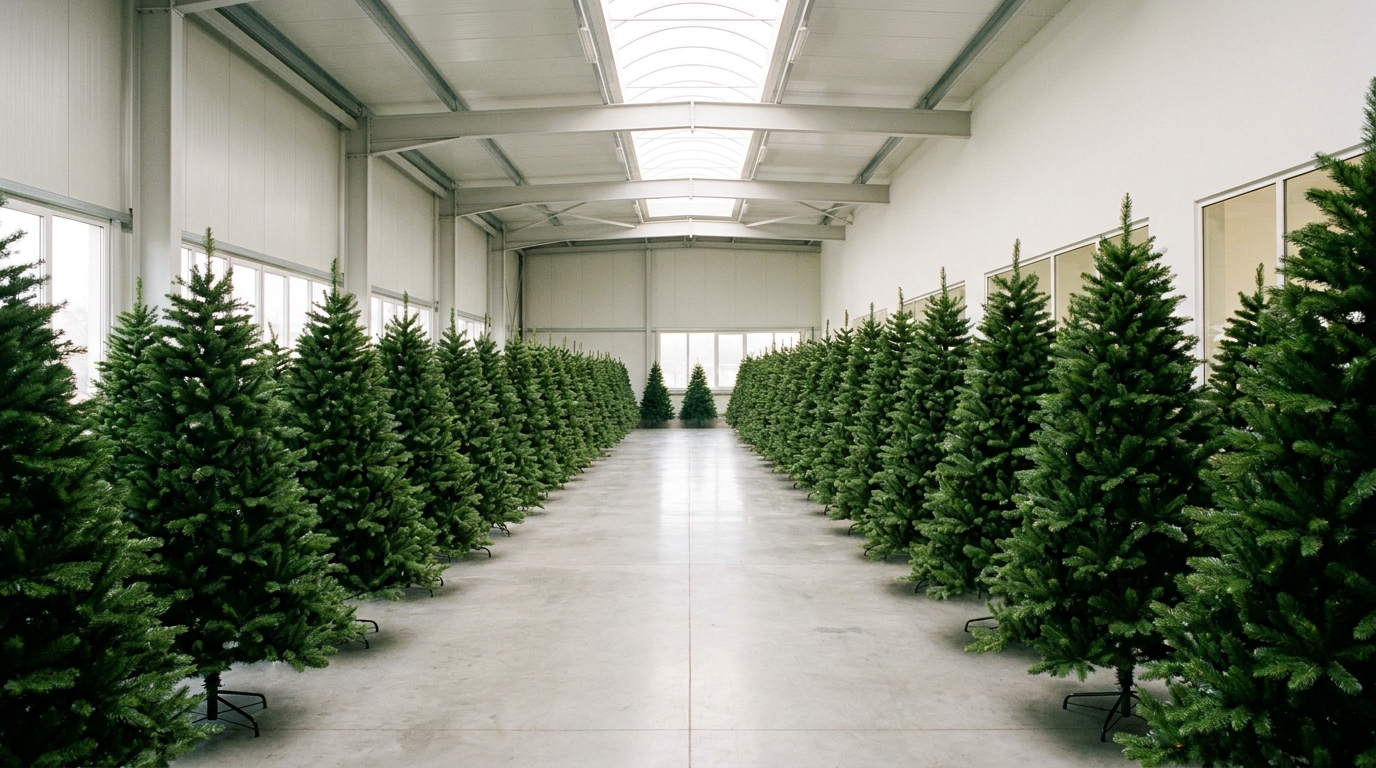
A single tree is easy to get right. Three thousand trees across a six week production window is where discipline shows. Green masterbatch can drift slightly between resin lots, and a tree from week one sitting next to a tree from week five should be indistinguishable on a retail floor. We keep a sealed colour standard for every order and check each batch of extruded needle film against it under consistent lighting, so the shade stays true from the first carton to the last.
Flocked and frosted trees get the same attention. Snow coverage is compared visually and by weight of flocking applied, so a customer who buys two trees for a double window display gets a matched pair.
The parts that take the strain
A tree is handled far more than people imagine. It goes up, comes down, gets folded into a loft, and does it all again the following year. Two components carry most of that work.
Hinged branches
Hinged construction is the standard for a reason. Branches fold flat for packing and swing down into place during setup, with no separate pieces to sort or lose. The hinge itself is the point to test. We open and close sampled branches repeatedly, checking that the pin stays seated, the metal collar does not deform, and the branch holds its angle instead of drooping. A branch that sags in year three is the kind of small disappointment that quietly costs a retailer a returning customer, so we would rather find a weak hinge batch on the factory floor than let it travel.
The metal stand
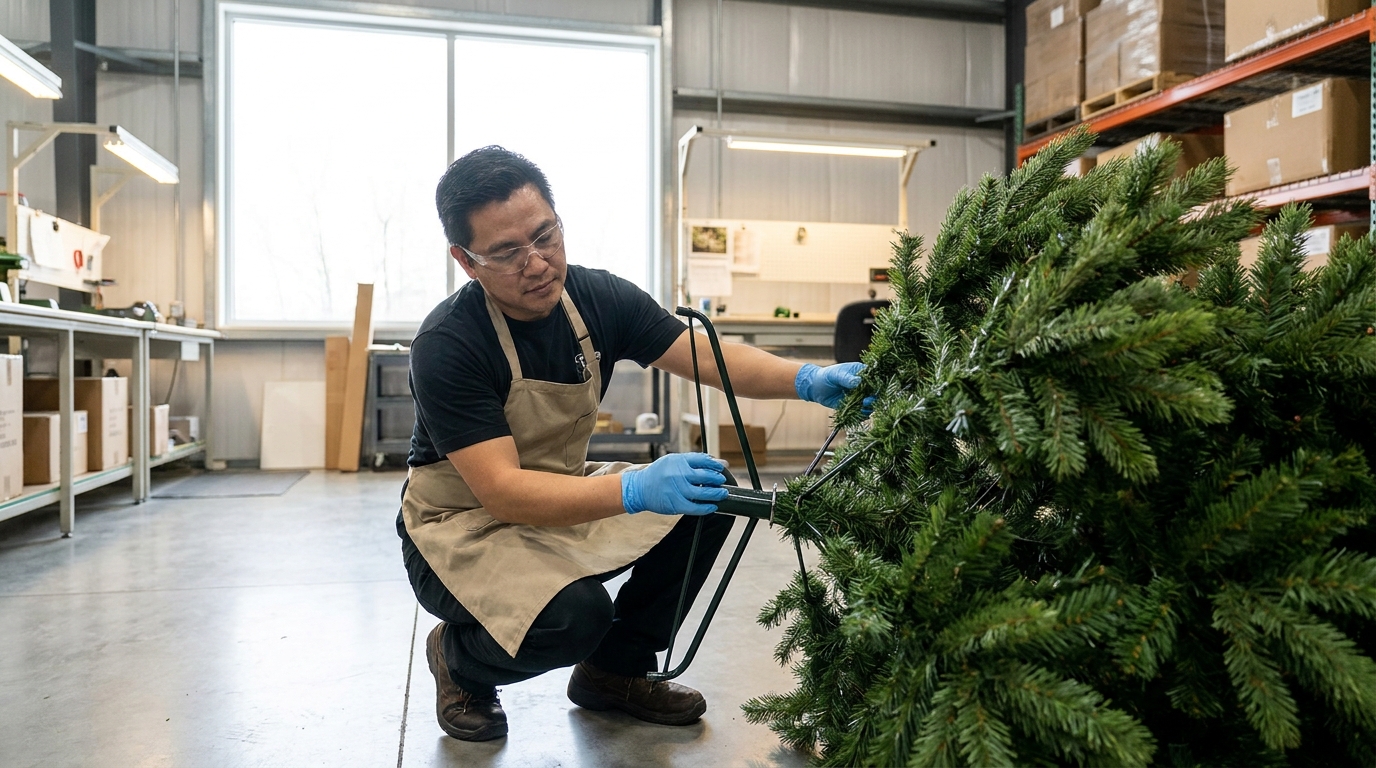
Every tree we ship stands on a folding steel base, and every sampled stand is assembled and load tested with the full tree upright. We check weld points, the fit of the pole into the socket, the grip of the tightening bolts and the stability of the footprint on a flat surface. Paint coverage matters too, since a stand that resists scratching and rust will still look presentable when the tree comes out of storage a decade later.
Fire safety is a sales requirement, not a footnote
Retail buyers in the UK, Europe, North America and Australia all face fire safety expectations, and rightly so. The PVC and PE materials we use are formulated to be fire retardant, and we support that with test reports from recognised laboratories against the standards each market asks for. Buyers receive the documentation with their order file, so when a chain store’s compliance team asks for evidence, it is already in hand. During production we also verify that the certified material lot is the one actually running through the extruders, which is a simple check that keeps the paperwork honest.
A quality certificate tells you what the material can do. A batch check tells you that this specific order was made with it. Buyers deserve both.
Packing that survives the journey
A sea voyage, a container yard, a distribution centre and a courier van are a lot to ask of a cardboard box. We use double wall or five ply cartons sized so the folded tree sits snug, with the stand and pole sections secured so nothing shifts and rubs during transit. Printed assembly guides go inside, carton markings match the buyer’s warehouse system, and sampled cartons from each batch are drop tested before loading. Container stuffing is photographed layer by layer, which protects everyone if a question ever comes up about how the goods were loaded.
The final look before the doors close
Pre-shipment inspection pulls all of this together. Working to an AQL sampling plan, our team assembles finished trees from random cartons across the batch, checks tip count, colour, hinge action, stand stability, labelling and carton condition, and records everything with clear photographs. The buyer receives the photo report before the container leaves, so approval is based on evidence rather than trust alone. Many of our long standing customers tell us this report is the moment they relax about the season ahead.
None of these checks is complicated. Each one is simply a promise kept, and together they add up to a tree that a retailer can put their name behind. When the customers come back next November asking for the same range again, that is the check that matters most.
Ready to price your Christmas range?
We are a Guangzhou factory partner. Send your sizes and quantities and we will quote you, delivery included.