PVC, PE and flocked: understanding artificial tree materials
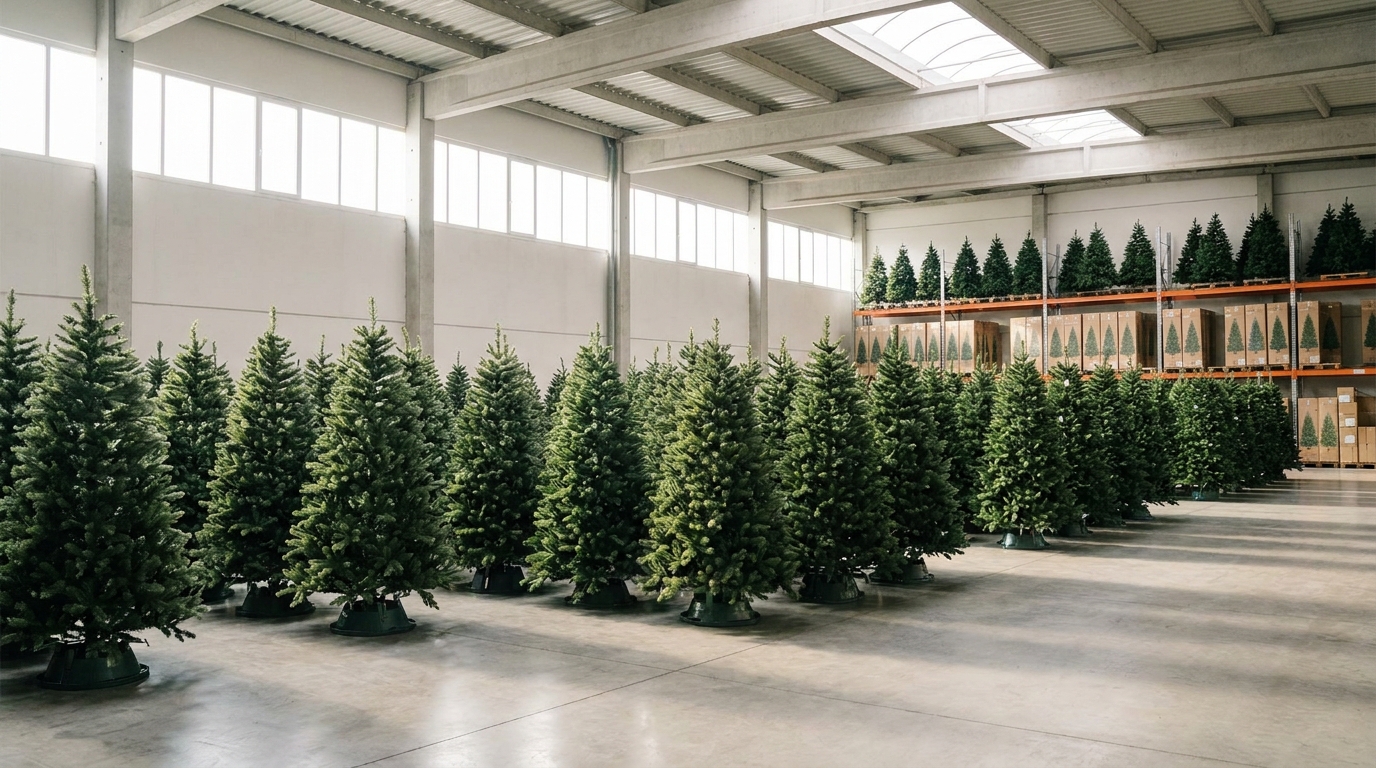
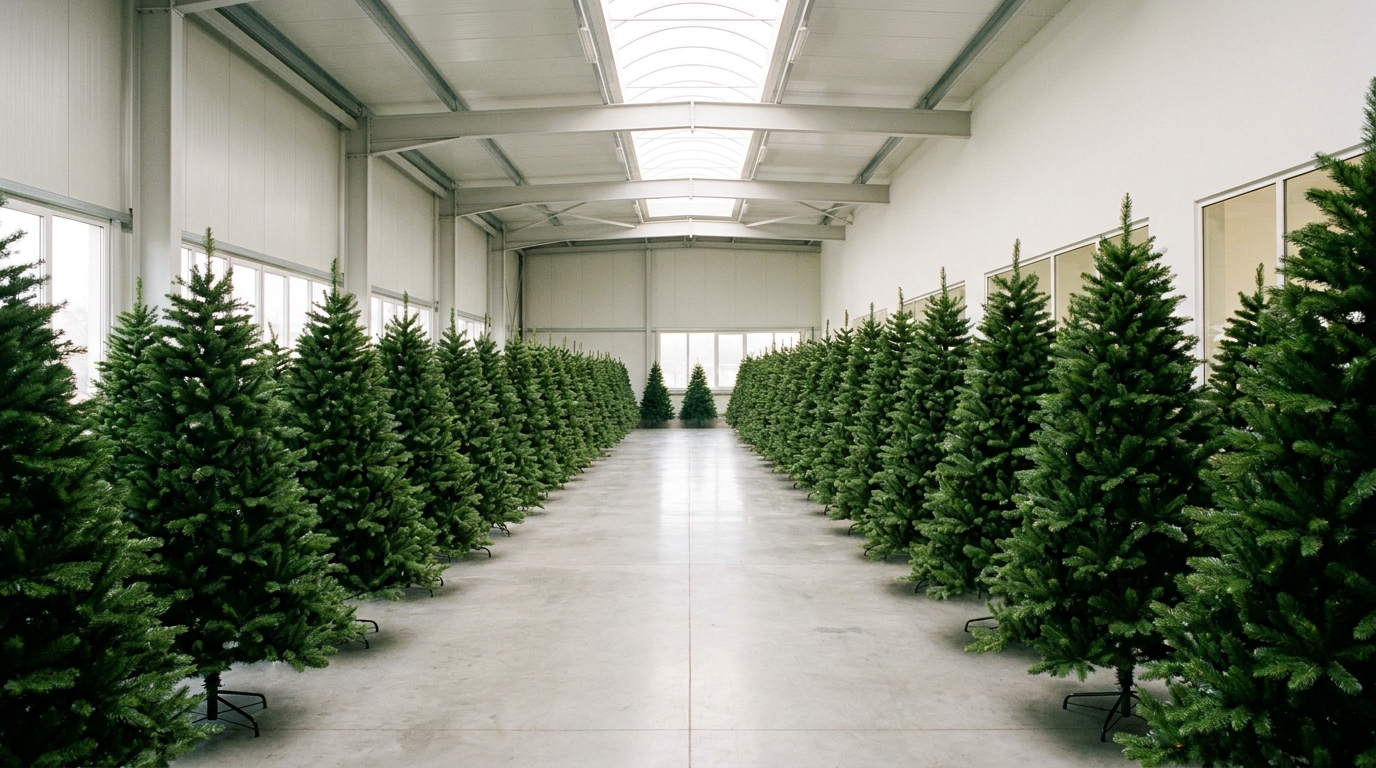
Walk through any Christmas tree factory in Guangdong and you will see the same three ideas repeated in a hundred variations: PVC tips, PE tips, and trees that blend the two. Add a flocked snow finish and a set of pre-lit warm-white LEDs and you have covered almost everything an importer will ever be asked for. The materials themselves are simple. What matters for a buyer is understanding how each one changes the price, the look on the shop floor, the weight of the carton, and the kind of customer who ends up taking the tree home. Once you can read a specification sheet with confidence, choosing artificial Christmas trees for your market becomes a much calmer job.
PVC tips: the classic, full-bodied workhorse
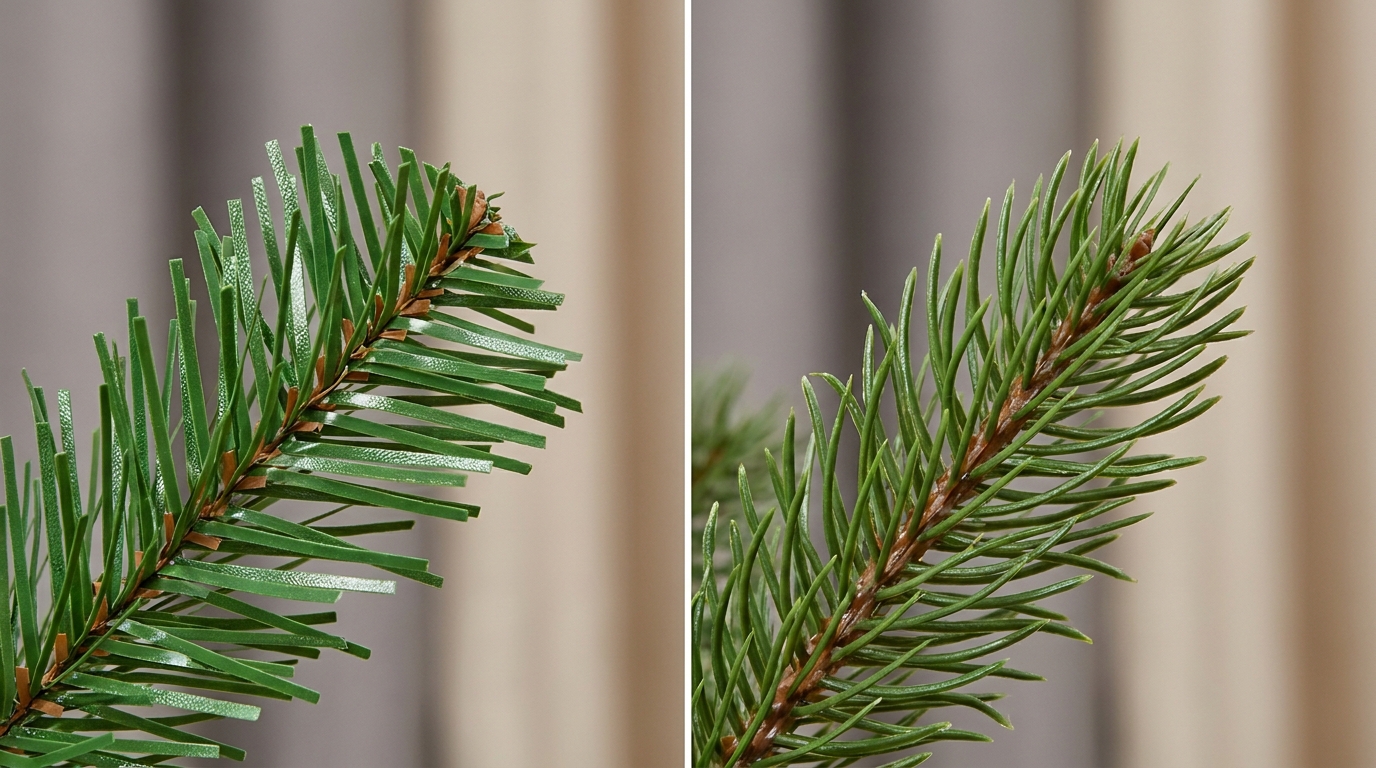
PVC is where artificial trees began, and it still makes up the majority of tips produced today. Thin sheets of PVC film are cut into needle shapes, twisted around a wire core, and shaped into branch tips. The result is that familiar full, soft, slightly brushed look that most people picture when they think of a Christmas tree.
PVC has real strengths. It is the most affordable material per tip, so a factory can pack a tree with a generous tip count without pushing the price up. A 180 cm PVC tree with 800 to 1,000 tips looks dense and welcoming, hides the central pole well, and holds ornaments nicely. The needles are soft to the touch, and the colour range is wide, from deep forest green to two-tone green with lighter inner needles.
PVC trees suit value and mid-market retail. Supermarkets, garden centres running a price-led promotion, and online sellers competing on entry prices all lean on PVC. It is also the lighter option, which keeps freight and handling costs friendly.
PE tips: the realistic, premium choice
PE, or polyethylene, tips are made differently. Instead of cut film, the tip is injection moulded from a real branch cast, so each needle has a three-dimensional shape with natural taper and texture. Stand a PE tip next to a cutting from a live fir and the resemblance is genuinely close.
That realism comes with a few practical points to plan around. Moulded tips cost more to produce, so PE trees sit at the premium end of a range. PE is also denser than cut film, which makes the finished tree heavier. A large PE-rich tree can weigh half as much again as a PVC tree of the same height, so it pays to check carton weights before quoting delivered prices.
PE trees suit retailers whose customers are trading up from an older tree, department stores, and markets where shoppers compare artificial trees against fresh-cut ones. Buyers in those segments notice needle detail, and PE rewards that attention.
Mixed PVC and PE: the best-selling middle ground
Most premium trees sold today are actually mixed-tip trees, and there is a sensible logic behind it. The factory places PE tips on the outer layer, where hands touch and eyes land, and fills the inner body with PVC tips to create depth and hide the trunk. You get the realistic silhouette of PE with the fullness and value of PVC.
The PE-to-PVC ratio is a genuine specification, not a marketing line, and it is worth asking for. A tree that is 30 percent PE on the outside reads as realistic from a normal viewing distance. A 60 or 70 percent PE tree looks convincing even up close. Each step up in ratio moves the price and the weight, so the ratio is one of the easiest levers a buyer has for hitting a target retail price.
A useful habit for any buyer: ask for the tip count and the PE percentage together. Those two numbers, plus the height, tell you more about how a tree will look on the shop floor than any photograph.
Flocked trees: the snow finish
Flocking is a sprayed coating of white fibre and adhesive that gives a tree the look of fresh snowfall. It can be applied lightly, dusting just the branch ends, or heavily for a full snowy effect. Flocking works on both PVC and PE bases, and lightly flocked mixed trees photograph beautifully, which matters as more trees are sold from a screen.
A few practical notes. Flocked trees need careful packing, usually with an inner bag, so allow slightly larger cartons. A small amount of loose flock during first assembly is normal and settles after the first season. Flocked trees are strong in Scandinavian-style and modern white-and-neutral interiors, and they give a range a clear point of difference without a new mould or tooling cost.
Pre-lit trees: lights fitted at the factory
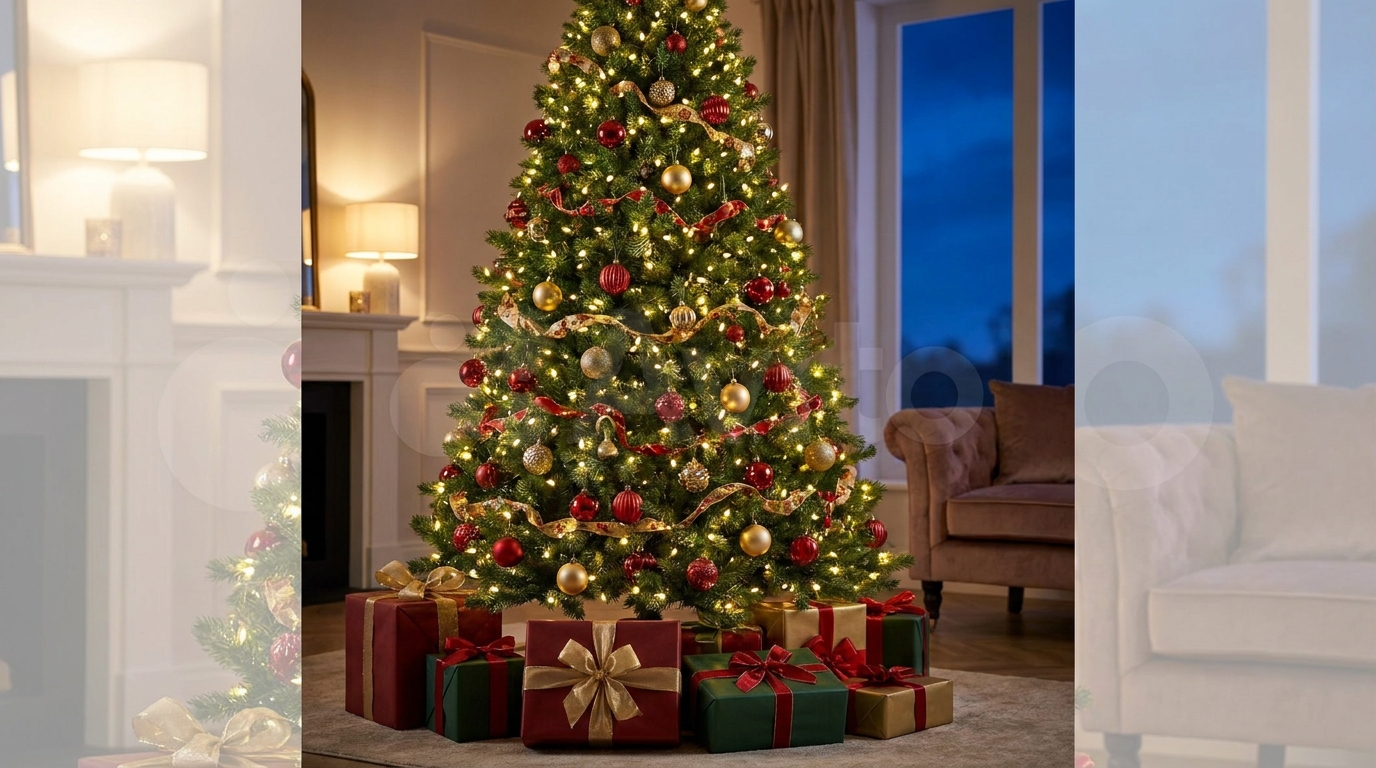
Pre-lit trees arrive with LED strings already woven through the branches, wired section to section so the customer connects one plug and the whole tree lights. Warm-white LED is the steady favourite, though colour-changing sets are growing quickly.
Pre-lit adds cost, but it also adds convenience that many shoppers will happily pay for, and it lifts the average selling price of a range. For a buyer, the key checks are the LED count relative to the tree height, roughly 50 to 70 lights per foot for a well-lit tree, and the plug type and certification for your destination market.
The details that apply to every material
Whichever tips you choose, some fundamentals stay constant, and they are worth confirming on every order.
- Hinged branches. Branches fold down from the pole for fast setup and compact packing. Hook-in construction still exists at the lowest price points, but hinged is now the expected standard.
- Metal stand. A folding steel stand sized to the tree height keeps a tall tree steady, especially for heavier PE models.
- Fire-retardant materials. Both PVC and PE can be produced with fire-retardant additives, and reputable factories will provide test reports for your market.
- Weight and packing. Ask for carton dimensions and gross weight per tree early. They drive your landed cost as much as the unit price does.
Putting a range together
A balanced range usually covers three tiers. A full PVC tree at a sharp opening price brings people in. A mixed PVC and PE tree, ideally pre-lit with warm-white LEDs, carries the middle and often becomes the volume seller. A high-ratio PE tree, perhaps with a lightly flocked sister model, sits at the top and sets the tone for the whole display. From there it is a matter of matching heights, tip counts, and light counts to what your customers already buy, and letting each material do the job it does best.
Ready to price your Christmas range?
We are a Guangzhou factory partner. Send your sizes and quantities and we will quote you, delivery included.